
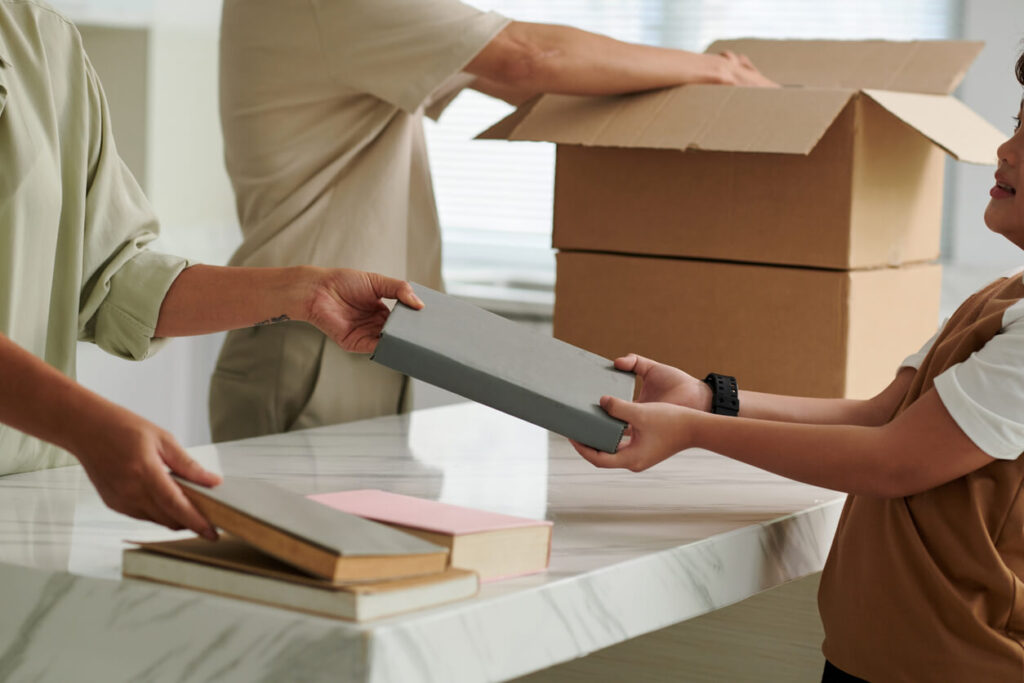
If you are wondering how to pack books for moving, you are not alone. Books seem simple until move day gets close. Then suddenly you are staring at a full library, a crowded shelf in the office, stacks by the bed, cookbooks in the kitchen, and a few forgotten paperbacks under the couch. A book collection can be one of the heaviest parts of any move, and if you pack books the wrong way, boxes get too heavy, covers get bent, and pages can warp before they ever reach your new home.
The good news is that there is a right way to do it, and it is not complicated. You just need the right box sizes, a little planning, and a method that protects your books without making unpacking miserable. Whether you are moving across town or planning a long distance relocation, these practical tips will help you pack your books correctly and keep your collection in good shape from the first shelf to the final destination.
Why books are harder to move than they look
Books are dense. That is the whole problem. A medium stack can feel manageable in your hands, but once you place all the books into one box, the weight adds up fast. People often make the same mistake: they grab large boxes, fill them to the top, and then realize the box is too heavy to lift, carry, or stack safely in the moving truck.
Books also damage easily in ways people do not notice right away. Bent book covers, torn dust jackets, warped pages, and split spines often happen because there was too much empty space in the box, too much pressure from poor stacking, or not enough paper between delicate items. If you want a stress free move, books need a little more respect than most household stuff.
Start early and sort before you pack
The best way to pack your books is to start early. Do not wait until the night before the move and start pulling everything off the shelf in a panic. Books take longer than people expect because they are heavy, often sentimental, and surprisingly easy to overpack.
Before you tape a single box shut, go through your collection and decide what is actually coming with you. This is the moment to be honest. If you have books you have not touched in years, duplicates, old textbooks, or titles that no longer fit your new space, now is the time to donate or sell them. A used bookstore may take some, local library sales sometimes accept contributions, and book donations are an excellent way to lighten your load while helping someone else build their own library.
For many book lovers, this part is emotional. That is normal. But moving is also a chance to edit your collection with intention. If a smaller house, condo, or apartment is your next step, carrying all the books you own may not make sense. Donate what you can, sell what still has value, and save the shelf space for the books you truly want in your new home.
Gather the right packing supplies
You do not need fancy materials, but the right supplies make packing books easier. Most of the time, simple beats complicated. The goal is to protect the books, control the weight, and make the boxes easy to move and easy to label.
Here is what you should have ready before you pack books:
- small boxes or sturdy book boxes
- packing paper
- packing tape
- bubble wrap for fragile or valuable books
- markers to label each box
- rolling suitcases or hard-sided suitcases with wheels
- acid free paper for rare or delicate editions
Small boxes matter more than people think. When you pack books in small boxes, you naturally control the weight better. Large boxes sound efficient, but they become brutal once they are full. A small box filled with books is manageable. A large box filled with books is a back injury waiting to happen.
If you have spare suitcases, especially rolling suitcases with wheels, use them. They are perfect for heavy books because the wheels do the hard part. Suitcases are especially useful for long distance moves, apartment buildings, and homes with stairs.
Choose small boxes over large boxes
This is the rule that saves most people from trouble: use small boxes. If you remember one thing from this guide on how to pack books for moving, remember that. Book boxes, banker boxes, and other compact cardboard boxes are usually the safest choice.
Large boxes have their place for lighter items like clothes, pillows, or linens. They are not ideal for a heavy library. Even if the cardboard holds, the weight can make the bottom bow out, the tape split, or the box awkward to carry through a house full of tight corners and furniture. A lighter box is simply easier on your movers, your family, and your floors.
If you only have a few large boxes available, do not fill them with only books. Instead, pack books on the bottom in a double layer, then fill the rest with lighter items like clothes, blankets, or towels. That helps control weight while still using the box efficiently.
How to pack books by type and condition
Not every book should be packed the same way. Paperbacks, hardcovers, coffee table books, and old family photo albums all need slightly different treatment. The basic idea is to protect the spine, protect the pages, and keep the books from shifting around inside the box.
For standard hardcovers and paperbacks, place books either upright like they sit on a shelf, flat in small stacks, or spine-down with the open edge facing up. Avoid packing books with the pages facing down and the spine facing up, because that stresses the binding. If you stack books flat, try to keep books of the same size together so the pile stays stable.
For older books, signed editions, or anything with sentimental value, wrap them in packing paper first. If the book is especially delicate, use acid free paper before adding a light layer of bubble wrap. This helps protect book covers and pages from rubbing, moisture, and pressure during the move.
For photo albums, rare books, or antique volumes, do not cram them into a crowded box. Give them a little breathing room. Fill gaps with paper so they do not slide around, but do not force them into a tight fit. That pressure can cause more damage than movement.
The best ways to arrange books in each box
There are three reliable ways to pack books in a box, and each one works in different situations. The key is to avoid dead space while keeping the weight manageable.
First, you can place books upright, just like on a shelf. This works well for most standard books and makes unpacking easier later. If you use this method, pack them snugly enough that they do not lean and shift during transport.
Second, you can stack books flat. This is often the best method for larger books, art books, and books with delicate covers. Keep the stack low and stable, and do not pile too high. Third, you can alternate directions in a box to create a tighter fit, especially if you are mixing sizes. However you arrange them, fill empty space with packing paper so the books do not bounce around in the truck.
A good rule is to make each box feel solid but not overloaded. If you can barely lift it, it is too heavy. Remove a few books and split the weight into another box.
Use packing paper and bubble wrap strategically
Packing paper is one of the most useful supplies for moving books. It keeps covers from rubbing together, helps fill open space, and cushions fragile items without adding much bulk. You do not need to wrap every paperback like fine china, but paper is a smart layer between valuable books and the sides of the box.
Bubble wrap is best used selectively. Save it for rare editions, books with fragile jackets, family albums, or books with decorative covers that scratch easily. Too much bubble wrap can waste space and make unpacking more annoying than it needs to be. Use enough to protect, not enough to mummify.
If you still have original moving supplies from a bookstore shipment, some books may already be packed flat in sturdy cartons. Those can be reused if they are clean and strong. Just reinforce the seams with tape and make sure the box still feels stable.
Don’t overfill the box
The temptation is always to squeeze in one more row. Then one more book. Then maybe that oversized dictionary on top. Resist it. The moment a box becomes hard to lift, it stops being useful.
A properly packed box should close without bulging and should feel balanced when you carry it. If the flaps do not meet cleanly, or the bottom sags when you lift it, repack it. Add tape across the bottom seam before loading, and use extra tape if the box will go into storage or travel a long distance.
This is also where rolling suitcases shine. If you have more books than expected, move some heavy books into suitcases with wheels. That can save your back and make moving books easier through long hallways, elevators, and parking lots.
Label every box clearly
A label should do more than say “books.” That is helpful, but not enough. Label each box with the room, a general category, and whether the contents are heavy or fragile. For example: “Office library, heavy,” “Bedroom shelf, paperbacks,” or “Living room book collection, fragile covers.”
Good labeling helps in two ways. First, it tells anyone carrying the box what to expect. Second, it makes unpacking much less chaotic at the new home. Instead of opening six random boxes to find your cookbooks or your child’s bedtime favorites, you will know exactly where they are.
If you are working with a professional moving company, labels also help the crew place boxes in the right new space from the start. That saves time and avoids the shuffle of moving heavy boxes twice.
What to do with rare, sentimental, or valuable books
Some books should not be packed like everyday reading copies. First editions, signed books, antique volumes, family Bibles, inherited collections, and photo albums deserve more care. These are the books that often matter most, even if they are not the heaviest part of the collection.
Wrap each one in acid free paper, then add a light protective layer if needed. Keep them in a sturdy small box and do not stack too much weight on top. For especially valuable books, it may be smarter to transport them yourself rather than load them into the moving truck. That gives you more control over temperature, handling, and timing.
If your collection includes items that could be affected by moisture or heat, avoid leaving them in the truck for extended periods. This is especially important during summer moves, winter moves, or any move involving temporary storage.
When to donate, sell, or store books instead
Not every book needs to make the trip. If you are moving into a smaller new home, downsizing before the move can save money, save box space, and make unpacking faster. Books are expensive to move because of their weight, and a large amount of books can add up quickly.
If you need to trim down, donate readable books to local book donations programs, schools, charities, or community groups. Sell newer titles, collectible volumes, or textbooks to a used bookstore. If you are not ready to part with certain books but do not have room right away, short-term storage may be the right deal.
Just be realistic. Storage can become a waiting room for things you never use again. If you already know a box of books is unlikely to come back onto a shelf, it may be better to donate it now and focus on building a collection that fits your new space.
Tips for unpacking books in your new home
Unpacking books sounds easier than packing them, but it goes faster if you have a plan. Start with the boxes you labeled by room and category. Set up the main shelf units first so books are not left stacked on the floor for weeks.
As you unpack, take the chance to reorganize your library. You may want to group by genre, author, color, or function. Cookbooks in the kitchen, work materials in the office, children’s books near bedrooms, and favorite novels where you actually read them. A move is one of the few times your whole collection is already in motion, so use that momentum.
If any books picked up moisture or dust during the move, let them air out before placing them tightly on a shelf. Wipe covers gently, stand them upright, and give them a little space at first. That small step helps protect the pages and keeps your new home from smelling like damp cardboard.
Common mistakes to avoid when you pack your books
A few mistakes show up again and again when people pack books. The first is using oversized cardboard boxes. The second is skipping packing paper and letting books slam into each other. The third is failing to label properly, which makes unpacking a frustrating scavenger hunt.
Another common mistake is mixing books with random household stuff that can damage them. Candles, liquids, cleaning supplies, and anything scented should stay far away from books. Pages absorb odor more than people realize. Your library should not arrive smelling like detergent or spilled soap.
Finally, do not wait too long. People often think books are easy, so they leave them for last. Then they are still boxing up a full collection while trying to handle furniture, coordinate friends, and prepare the rest of the house. Pack books early, and you will have more time for the more important things that pile up right before moving day.
When hiring movers can make the process easier
If you have a serious home library, a lot of stairs, or a move with tight timing, hiring a moving company can make a real difference. Professional movers know how to stack a truck, protect fragile items, and handle heavy boxes without turning move day into a wrestling match.
This is especially true for families with children, older adults, or anyone juggling work, closing dates, and a hundred other details. A good team can help keep the process stress free, whether you need full packing help or just support with loading and unloading.
For homeowners and renters in the Chicago area, especially around Tinley Park and surrounding communities, working with experienced movers can take a lot of pressure off your family. If your move includes a large library, specialty books, or heavy items that need careful handling, it helps to have a crew that understands how to protect what matters.
Final thoughts on packing books the right way
Learning how to pack books for moving is really about managing weight, protecting the collection, and making life easier on both ends of the move. Use small boxes, reinforce them with packing tape, wrap delicate books in paper, and label everything clearly. If you have suitcases with wheels, put them to work. If you have books you no longer need, donate or sell them before move day.
Most of all, do not underestimate your books. A personal library carries real weight, literally and emotionally. It holds memories, habits, interests, and pieces of who you are. Pack your books with care, and when you start unpacking in your new home, that familiar shelf of favorites will make the place feel like yours a lot faster.
If you would rather leave the heavy lifting to professionals, Move Out Men helps customers move with care, clear communication, and the kind of practical experience that makes even a book-heavy move feel manageable.