
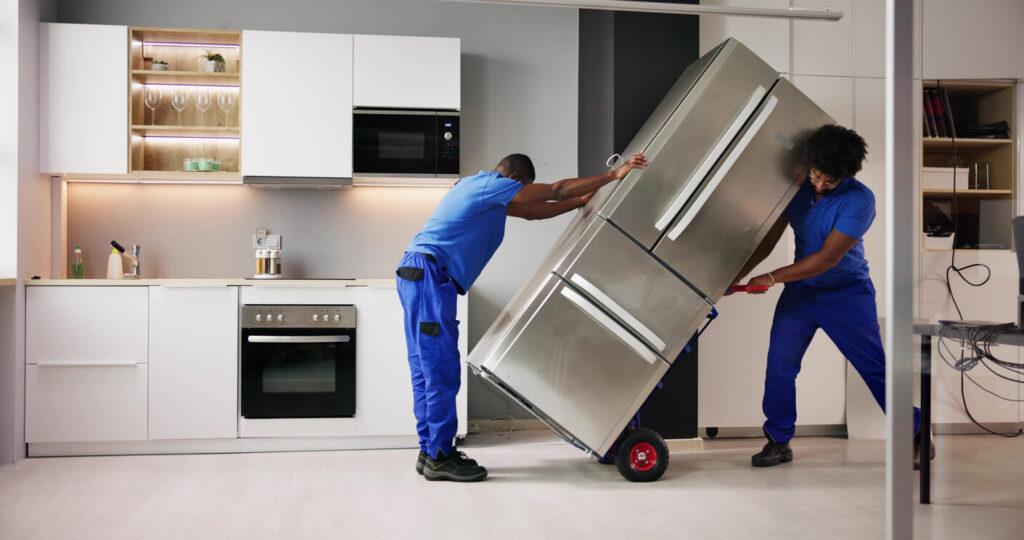
Moving a refrigerator ranks among the most challenging tasks during a home relocation. These bulky appliances typically weigh 200-400 pounds and require proper planning, equipment, and technique to move safely. Whether you’re upgrading to a new model or relocating to a different home, understanding how to move a fridge properly will protect both your appliance and your back.
At Move Out Men, we’ve helped countless homeowners in the Tinley Park area safely relocate their refrigerators. This guide shares our professional techniques to help you move your fridge with confidence.
Planning Your Refrigerator Move
Before you touch your fridge, proper planning makes everything easier. Start by measuring your refrigerator’s height, width, and depth. Then measure every doorway, hallway, and stairway along your planned route. This simple step prevents unpleasant surprises mid-move.
Map out the path from your kitchen to your moving truck. Look for potential obstacles: tight corners, narrow doorways, stairs with tricky angles, and outdoor challenges like curbs or uneven sidewalks. You might need to remove doors, both on the fridge and your home, to create adequate clearance.
This is not a one-person job. A refrigerator’s size and awkward shape make it genuinely dangerous to move alone. Recruit at least one strong helper, ideally two.
Gather the Right Moving Equipment
Professional movers rely on specific tools for moving refrigerators, and you should too:
- Appliance dolly: Unlike standard dollies, appliance dollies feature higher weight capacities and wider bases designed specifically for large appliances
- Moving straps: These secure the fridge to the dolly and prevent shifting during transport
- Moving blankets: Protect your fridge’s finish from scratches and dents
- Floor protection: Cardboard, laminate panels, or furniture sliders prevent floor damage
- Heavy-duty tape: For securing doors and power cords
- Work gloves: Improve your grip and protect your hands
Many of these items are available at hardware stores, or you can rent appliance dollies from moving equipment rental companies.
How to Move a Fridge: Preparation Steps
Empty and Clean the Refrigerator
Start this process at least 24-48 hours before moving day. Remove all food, beverages, and removable parts like shelves and drawers. Use coolers for perishable items you’ll need before the move. Glass shelves should be wrapped separately and packed securely, they’re fragile and expensive to replace.
Once empty, unplug the refrigerator and secure the power cord to the back or side with tape so it doesn’t drag.
Defrost the Freezer
If your freezer has ice buildup, it needs to defrost completely. This process can take several hours, so don’t wait until moving day. Place towels inside and around the fridge to absorb melting ice. Thoroughly clean and dry the interior to prevent mold growth and odors during transport.
Protect Your Floors
Even with wheels, refrigerators can scratch or gouge floors when moved. Before pulling your fridge away from the wall, protect your flooring. For tile or hardwood, lay down cardboard or spare laminate panels. You can also use furniture slider pads under each corner.
Tilt the fridge slightly (just enough to slide protection underneath the front wheels), position your floor protector, then gently slide the unit away from the wall.
Moving the Refrigerator Safely
Position the Dolly
With your helper ready, position the appliance dolly at the center of one side of the fridge. Have your assistant tilt the refrigerator slightly backward while you carefully slide the dolly’s base plate underneath. Center the fridge on the dolly and ensure it’s balanced before tightening the straps.
Important: Always keep your refrigerator upright. The internal oil in the compressor can shift into cooling lines if laid on its side, potentially damaging the appliance.
Wrap and Secure
Wrap the fridge in moving blankets to protect its exterior. Secure the blankets with tape, making sure corners and edges have adequate padding. If you removed the doors, store all hardware in a labeled bag so you can reattach them later.
Use the dolly straps to firmly secure the refrigerator. It shouldn’t wiggle or shift when properly strapped.
Navigate Obstacles Carefully
When moving through doorways, go slowly. The person operating the dolly should walk backward, pulling the load, while your helper guides from the opposite side and watches for clearance issues.
For stairs, tilt the dolly to a 45-degree angle and take one step at a time. The person below should guide and help ease the weight, while the person above controls the descent or ascent. Never rush this process.
Loading the Moving Truck
Use a loading ramp if available, it’s significantly easier than lifting. Walk backward and pull the dolly up the ramp rather than pushing it. Your helper should assist from behind and guide the dolly to prevent tipping.
Once inside the truck, leave the refrigerator strapped to the dolly if possible. This makes unloading easier. Use moving straps or ratchet straps to secure the dolly to anchor points in the truck bed, preventing movement during transit.
Transporting and Setting Up Your Fridge
Can You Lay a Refrigerator on Its Side?
The short answer: avoid it whenever possible. Refrigerators are designed to operate upright, and transporting them horizontally risks oil migration from the compressor. This oil can settle in cooling lines and cause operational problems.
If laying the fridge on its side is absolutely necessary for a short move, position it so it rests on the side opposite from where the compressor lines attach. After moving, let the fridge stand upright for at least twice as long as it was horizontal before plugging it in. For example, if it was on its side for two hours, let it rest upright for four hours.
At Your Destination
Once you’ve moved the refrigerator to its new location, don’t plug it in immediately. Even if transported upright, let it rest for 2-3 hours. This allows internal fluids to settle and ensures proper operation.
Before pushing the fridge into its final position, level the unit using the adjustable feet. A level refrigerator operates more efficiently and prevents doors from swinging open unexpectedly.
When to Call Professional Movers
Some refrigerator moves are best left to professionals:
- Moving extra-large or commercial refrigerators
- Navigating especially tight spaces or multiple flights of stairs
- Moving a refrigerator long distances
- When you lack proper equipment or helpers
- If you have physical limitations that make heavy lifting risky
Professional movers like Move Out Men have the experience, equipment, and insurance to handle challenging refrigerator moves safely. We treat your belongings with care and handle every detail, from disconnecting water lines to securing the appliance in our trucks.
Protect Your Investment
A refrigerator represents a significant investment in your home. Taking the time to move it properly protects that investment and prevents costly damage. With proper planning, the right equipment, and careful technique, you can successfully move your fridge to its new location.
If you’re moving in the Tinley Park or greater Chicago area and want professional assistance with your refrigerator or entire move, contact Move Out Men for a free estimate. Our experienced movers will handle your refrigerator with the care it deserves, giving you peace of mind during your relocation.